
Good Manufacturing Practices (GMPs)
Good Manufacturing Practices* (GMPs) are the basic operational & environmental conditions required to produce safe foods. They ensure that ingredients, products and packaging materials are handled safely and that food products are processed in a suitable environment. GMPs address the hazards associated with personnel and environment during food production. They provide a foundation for any food safety system. Once GMPs are in place, processors can implement a Hazard Analysis Critical Control Point (HACCP) system to control hazards that may affect the ingredients and packaging material during food processing.
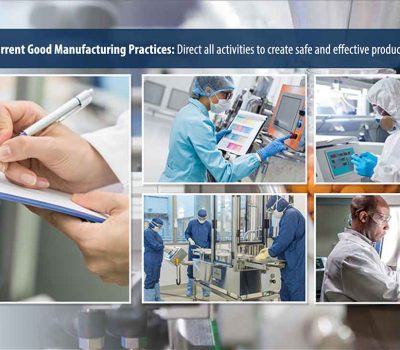
What GMPs Address ?
1. ENVIRONMENTAL CONTROL (premises):
location, design and construction of the building and its interior, equipment, water supply
location, design and construction of the building and its interior, equipment, water supply
2. PERSONNEL PRACTICES:
personal hygiene, hand washing, clothing/footwear/headwear, injuries and wounds, evidence of illness, access and traffic patterns, chemical use
personal hygiene, hand washing, clothing/footwear/headwear, injuries and wounds, evidence of illness, access and traffic patterns, chemical use
3. SHIPPING, RECEIVING, HANDLING, STORAGE:
Inspection procedures for transport vehicles; loading, unloading and storage practices; inspection procedures for incoming products; shipping conditions; returned and defective products; allergen control; chemical storage; waste management
Inspection procedures for transport vehicles; loading, unloading and storage practices; inspection procedures for incoming products; shipping conditions; returned and defective products; allergen control; chemical storage; waste management
4. PEST CONTROL:
Monitoring procedures for the exterior and interior of the building (ex: surveillance, fumigation) and the use of pesticides.
Monitoring procedures for the exterior and interior of the building (ex: surveillance, fumigation) and the use of pesticides.
5. SANITATION:
Cleaning and sanitizing procedures and pre-operational assessment.
Cleaning and sanitizing procedures and pre-operational assessment.
6. EQUIPMENT MAINTENANCE:
Procedures describing preventive maintenance and calibration of all the equipment and instruments that can affect food safety (ex: thermometers, thermocouples, metal detectors, scales, pH meters).
Procedures describing preventive maintenance and calibration of all the equipment and instruments that can affect food safety (ex: thermometers, thermocouples, metal detectors, scales, pH meters).
7. RECALL AND TRACEABILITY:
Procedures that ensure final products are coded and labelled properly; incoming materials; in-process and outgoing materials are traceable; recall system is in place and tested for effectiveness (ex: procedures for mock recalls).
Procedures that ensure final products are coded and labelled properly; incoming materials; in-process and outgoing materials are traceable; recall system is in place and tested for effectiveness (ex: procedures for mock recalls).
8. WATER SAFETY:
Water safety monitoring procedures for water, ice and steam, and water treatment procedures that ensure it is potable for use in food processing Components.
Water safety monitoring procedures for water, ice and steam, and water treatment procedures that ensure it is potable for use in food processing Components.
